Working in threads
Models, mentions & side-asks
Pick a provider per turn, @mention another model for a side-ask, or drop a /btw.
One thread, any model. The provider pill on the composer picks who answers the next turn; the thread keeps its history, its worktree and its approvals whoever is talking.
The provider pill
Click the pill (it reads something like Fable · Xhigh or Grok 4.6) to choose a provider, an account, a model and, where the provider supports it, an effort level and context size. The choice is per turn; the next turn defaults to the same one.
Switching models mid-thread
When you switch providers, the new model does not see the old provider's private session — it receives a Context Pack: the original ask, what happened so far, the thread's rules, the current diff summary, recent command outcomes, and the environment it is running in. The transcript shows a pack marker so you can see exactly where the hand-off happened. The same mechanism powers failover.
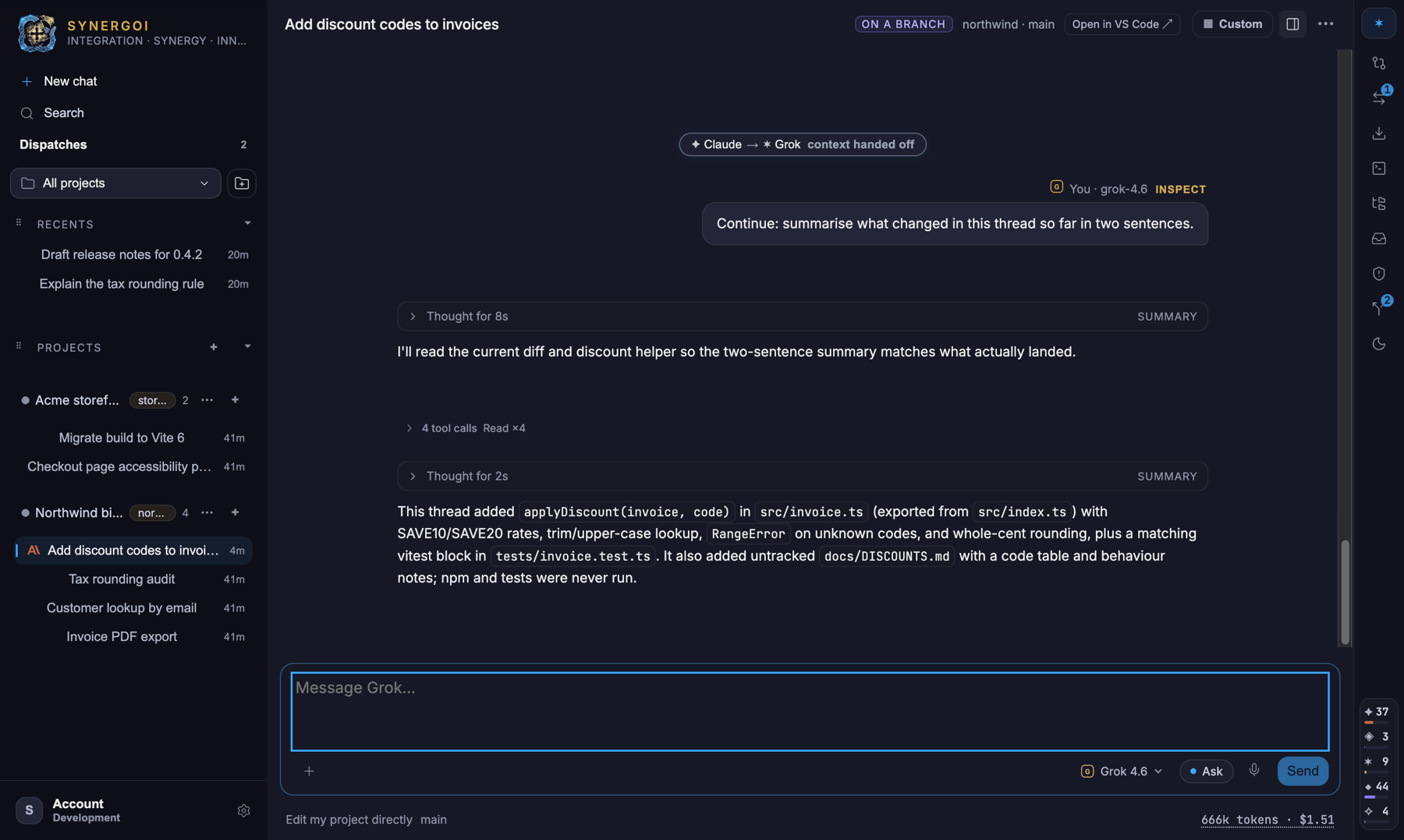
@mentions: side-asks
Type @ in the composer and pick another model. The message becomes a side-ask: it runs in parallel with a Context Pack of the thread so far, and its answer drops into the transcript as a card. The main thread's provider is unchanged. Use it for a second opinion on a design, a review of a diff, or a model-specific strength.
- Mention several models in one message to fan the question out.
- A side-ask card shows its own token usage and can be expanded, collapsed or dismissed; the main agent does not see it unless you paste it back.
- In a thread with sub-agents, @ also lists them so you can message a child directly where the provider allows it (Grok, from 0.0.5).
/btw: a quick aside
/btw sends a one-off question to the current model without it joining the thread's working context — handy for "what does this flag do?" while the agent is mid-task. The reply appears as a chip you can expand.
Queueing and steering
- While a turn runs, Enter queues your message for after the turn.
- ⌘Enter sends now: the turn is interrupted at a safe point and the agent steers with your new instruction.
- ⌘. stops the turn outright.
Something wrong or missing on this page? Email [email protected].